

Lillian King Produces Radio, Writes Great Songs, and Runs Marathons
The “Wait Wait...Don't Tell Me!” producer joins the program to chat about her music career, working with Spencer Krug, and trying not to buy stuff.

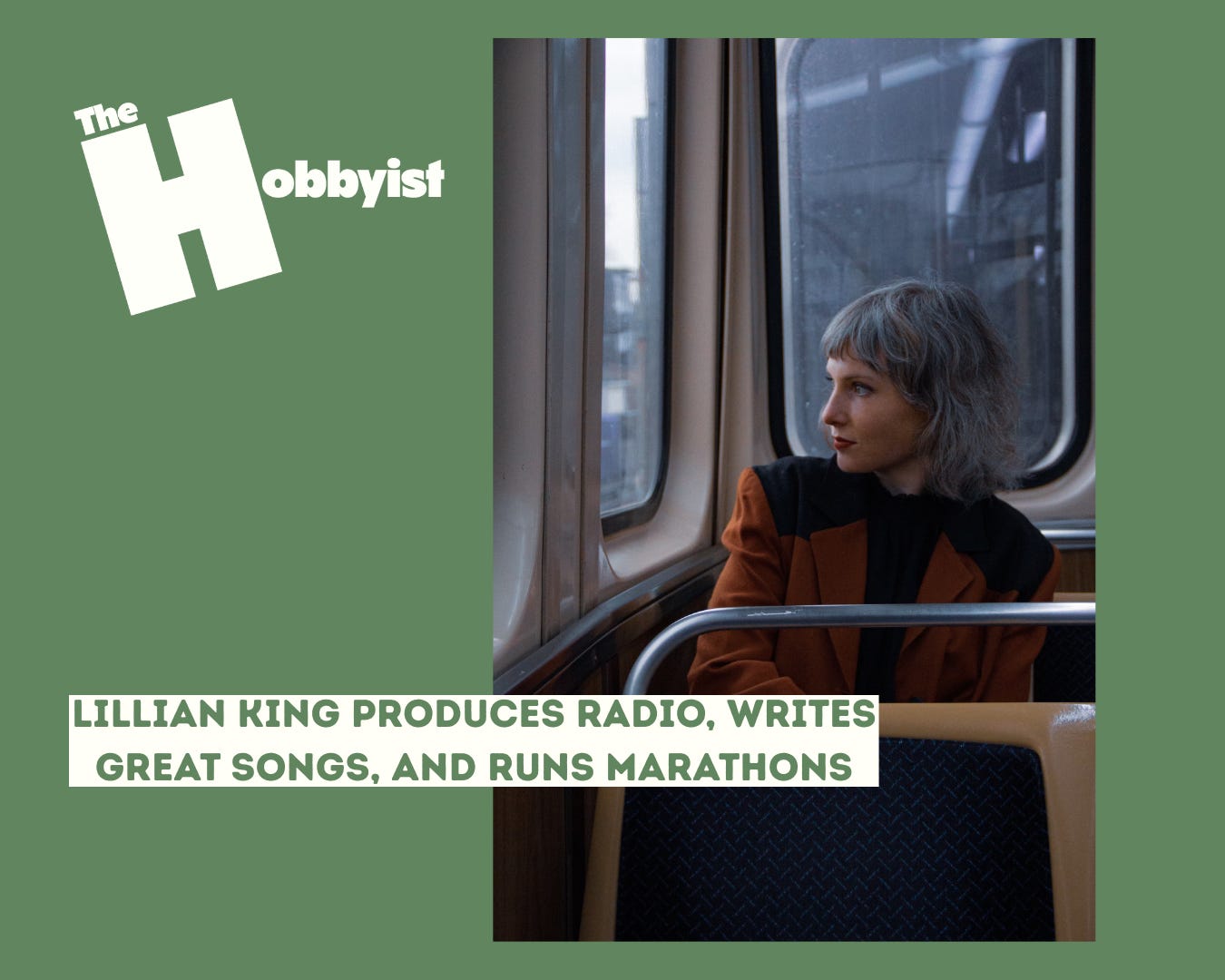
Photo by Kirsten Southwell
Lillian King’s debut LP, In Your Long Shadow, is just one piece of what I’ve come to learn is a delightful puzzle. King’s day job is as a producer on one of the great radio programs in modern history, Wait Wait…Don’t Tell Me!, the NPR program hosted by Peter Sagal. She interned for WWDTM!, and after college in Montreal, she moved to Toronto to work for Vice. The leadership structure there was…underwhelming, so King emailed her old NPR boss to check in and was offered a position on the show, if she would move to Chicago. She packed her bags and the city has been home ever since.
Throughout her education and career, Lillian has also written songs; mostly for herself, but occasionally releasing them and performing them at venues across the city. When Spencer Krug, all-time bandleader for Wolf Parade and Sunset Rubdown, announced a Chicago show in the early 2020s, King sent some demos and asked if she could open the gig. Krug agreed, and ended up taking her on a slew of dates, both because he loved her music and because she had a valid license.
King quickly realized that she needed more songs if she was going to be taking the stage each night, and she began writing the tracks that make up her 2024 EP, Gotta Burn. The momentum of writing continued into her debut, In Your Long Shadow, a truly breathtaking chamber-pop and crunchy folk-rock. The songs, in fact, were so good, that Krug decided to release the album as the first non-Spencer release on his label, Pronounced Kroog in October of 2025. Around the time the album came out, King asked about doing something for The Hobbyist, considering music is a “hobby” and she’s also a devoted, passionate runner. In true Hobbyist fashion, that interview is now being published three and a half months later. As embarrassing as that is, I’m thrilled that I’m finally able to run this conversation. Lillian is hilarious and thoughtful, interested in tons of cool things and passionate about everything she dives into; in short, the consummate Hobbyist guest. Check out our conversation below, which has been edited for clarity and length.
Hey Lillian! Where are you based?
I’m in Chicago. I’ve lived here for about seven and a half years.
Where are you from originally?
I grew up in Washington D.C. on Capitol Hill, a mile away from the Capitol, which was the best. It’s great there.
Was/is your family involved in politics?
Well, when I was a kid, both of my parents were reporters. They met at Northwestern Journalism School. My mom worked in the Capitol when she worked for the Wall Street Journal and then the Washington Post, and my dad covered every imaginable thing from oil to foreign policy to terrorism to campaigns. It was political, but we were a part of that lifelong community of D.C. residents that were reporters or bureaucrats.
You’re obviously news adjacent these days. Was that your dream growing up?
When I was a kid, I really wanted to be on Saturday Night Live. That was my absolute dream job. I was more interested in jokes and when I was in college, I was part of a sketch comedy group, and it was honestly really good. I sometimes think back on the sketches and I’m like, those are still funny. I applied for the Wait Wait...Don’t Tell Me! internship from the joke side of things as opposed to the news side of things. I do think that I have a news savviness from just being around it all the time. My dad would take me on campaign trips sometimes. We spent a lot of time as kids in the Wall Street Journal bureau and in the Capitol. It’s definitely in my blood.
When did the internship with WWDTM! take place?
I was an intern when I was still in college. I went back to school, graduated. I was living in Montreal at the time. I moved to Toronto and worked for a year at Vice News, on the TV production side of things. I hate to speak ill of the dead, but it wasn’t the most enjoyable working environment. Everybody there was so smart but their intelligence was completely underutilized by the Vice machine. So, I emailed my now-boss when I was there and I was like, I had a great time as an intern, maybe people enjoyed having me around. If you ever have a job opening, let me know. He was like, This email is too long, but if you want to come to Chicago, I think we might have some space for you on the team.
So you moved to Chicago?
I did, yes. I wanted to live in Chicago so badly, and without a second of hesitation, it was immediately the right call. I still walk around Chicago with immense pride, but I live here. It’s so fun. I have the confidence and pride of somebody who’s made it to Broadway after growing up in the middle of nowhere. It’s not really that hard to move to Chicago [laughs], but I love it.
It’s not that hard but it speaks to your character that you were willing to leave a life that you had built to go to a new city. Was songwriting a part of your world when you first got to Chicago?
Yeah, music has always been there. I grew up in a very musical household. I got my first guitar from my uncles for my first communion. I grew up playing folk guitar with this amazing folk teacher in D.C. I was always playing guitar and playing music and I was always writing songs. In college, I was starting to perform more original music. I went to school in Montreal because I love music that’s made in Montreal. Everybody’s in 500 bands there, so it’s very easy to just start playing.
Did you find a community in Chicago pretty quickly too? There’s amazing music there, but there are a lot of different scenes.
Yeah, there are a lot of different scenes. It wasn’t a priority when I first moved here. I am really content to play music and write music just for myself. I will write songs for a really long time and not think about performing. It’s maybe a bad habit that all of the times where I’ve cracked my not-performing-exterior it’s because somebody’s been like, oh, you play music. Do you want to play at this thing? I’m really bad at self-motivating myself out of that to a certain extent. I did invite myself on a tour last year, so I was going to a lot of shows, but I wasn’t trying to network my way into playing music. I have found through friendship a wonderful music community.
There’s seven years after Outta The Park and before Gotta Burn where you’re, I imagine, focused on your work and life and not music. Were you still writing songs?
There were a couple years that were musically dark. I never really played music when I was in Toronto or when I first moved here. It’s hard enough trying to make friends and start a normal community then also have the confidence to play shows. I kicked off into a different songwriting world during COVID, especially when I had COVID. There was this week where I had COVID and it was in the middle of the summer. It was beautiful outside. I felt really disconnected from the world. I was living by myself. I was in a relationship that wasn’t the brightest spot in my life at the time. I really enjoyed the time alone and I wrote a lot of songs about that. Some of those songs are on the album [In Your Long Shadow], which is nice. Even though they’re five years old, they still feel fresh to me.
Do you have a way that you write songs or is it just whenever you have time you pick up the guitar?
I cannot just be like, I need to write a song today. What happens a lot is I have 20 minutes to kill before going to something, and that’s always when I want to play guitar. I’m always like, dang, I wish I had more time. In the time limit is where it gets better, though. When I was in Montreal, I would write two minute long songs. It would all come together at the same time, it would be completely stream of consciousness. I really love those songs, but once they left my mouth, I would not be able to add any lyrics. I wouldn’t really be able to change things. I didn’t feel confident enough in my songwriting. Everything felt too thought out if I added stuff. Now, I’ve totally changed that. I write songs all the time when I’m running. I write them on the train. Lyrics really come from all these different places, which helps because then when I’m picking up a guitar I have all these different fragments of ideas.
How did you end up on tour with Spencer Krug?
That was truly an insane thing to happen. Spencer was supposed to play a very small show in Chicago. He was playing solo and I’m a huge fan of his. His music is one of the main reasons why I moved to Montreal. I went to see Sunset Rubdown three times on their reunion tour. I was like, I’m just going to be confident. I’m going to be bold. I’m going to send him a couple demos and ask if he needs a local opener for this Chicago show. He was like, I really like the idea of a solo guitarist opening for my solo synth show. He asked if I wanted to play any other shows. I said I would love to play Montreal. Then he asked if I knew how to drive because he really needed another driver. It was him and his friend—and now my friend—Brad, and Brad doesn’t know how to drive. And he was like, we’re two strangers, but we’re very nice and would you want to join? I was like, absolutely. That sounds amazing.
It was approaching and my boyfriend was like, you need new music. All of your songs are old. Gotta Burn came out of, oh shoot, I don’t have anything that shows what my music sounds like now. So the band formed and we did two fast days recording it. I had all the songs, which was helpful, but it was made because it had to happen.
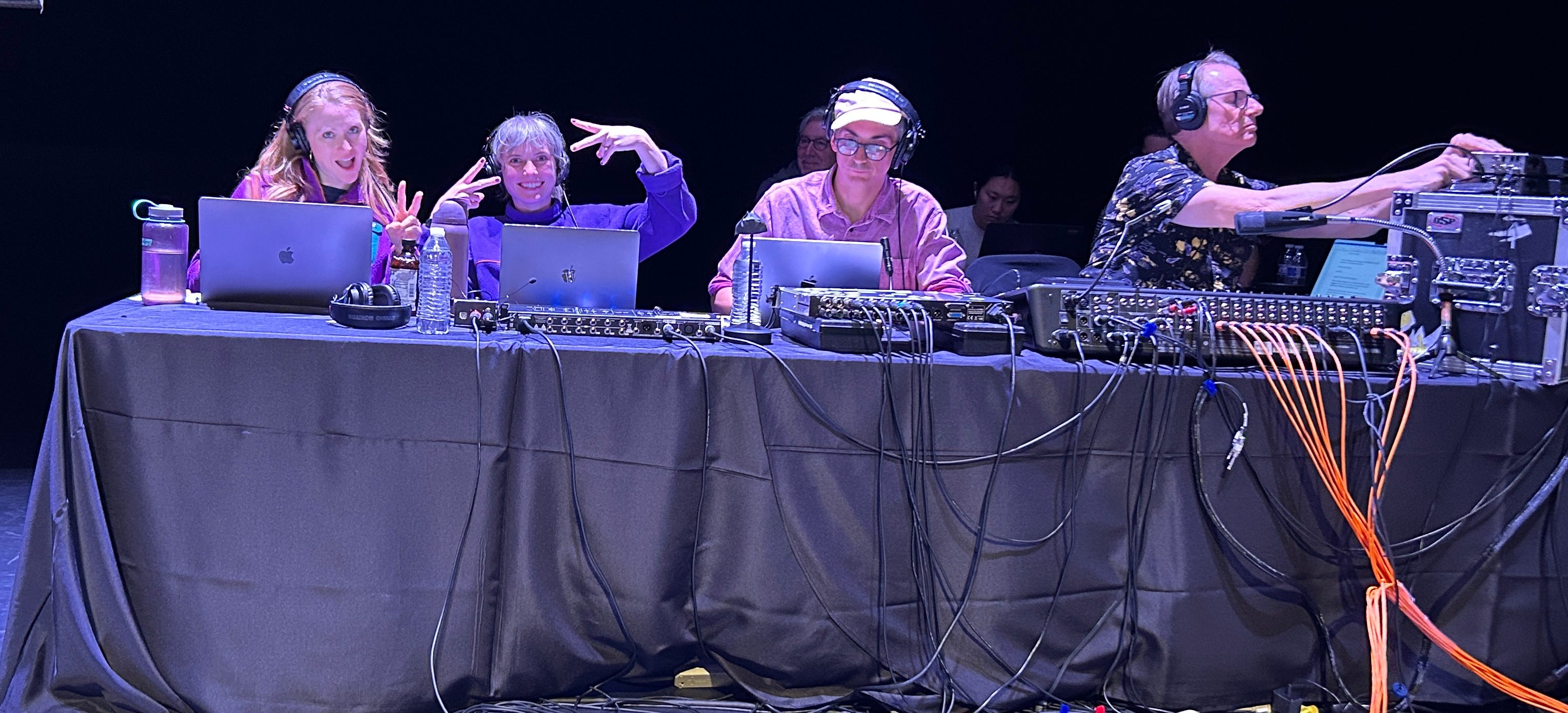
Photo courtesy of Lillian King
How many shows did you do with him?
We did 10 or so days of shows. Eight shows, maybe. It was so fun. It was so fun.
I’m such a huge fan. It’s so cool that your album was the first non-Spencer Krug release on his label. What’s that? How much of it was recorded before you guys talked about releasing it on Pronounced Kroog?
That was such an immense honor. It still doesn’t feel real to me, but we had a lot of conversations on the tour about music and about how we felt about making music; our ethos’, what our values were, what we thought about the music industry. We have similar approaches to both writing music and also music when it’s out in the world. After the tour was over, he was like, if you ever come out with a full length, we would be really interested. There was this lingering offer. He was really familiar with my music as a solo artist, so I wasn’t really sure what that would be like if I was going to play with a full band.
The offer was there. The album was more of a response to grief from my dad dying and me being at a complete loss for what to do in a world that’s changed. It was, though, good to do this thing during a time that was really difficult, but also a very rich songwriting time, which still feels baffling. It was also important to know that I had this support from somebody who I looked up to so much. I was sending him demos and he was very present and supportive during the whole process, which was really helpful.
I’m sorry for your loss. That’s awful. Was it easy to write during that period? Were you gravitating towards writing or did you force yourself to do it as a means of distraction?
It was easier than I ever thought it would be. I was in a good songwriting flow after the tour because I had all of this new confidence and I had a new understanding of what kind of songs I liked to sing. When I was really sad and grappling with this loss, I was spending a lot of time outside and spending a lot of time alone—both things that I still do a lot of. The first song I wrote was “Shadow.” That song is the most clear eyed picture of my grief. When I was writing it, I was like, is this too crazy? This is so intimate. I felt really exposed. Now that it has existed for a while, I really love that song. I really like playing it. I’m really proud of it. Now that I feel connected to the larger grief landscape that has existed in art and music for forever, I’ve realized how much I’ve gotten out of listening to other people write about grief. Maybe somebody else feels this way and that’s kind of helpful. Maybe one of the five people who listened to my music will feel this way [laughs].
Speaking of how impossible it is to get people to hear your music, what is it like? It must be kind of nice being able to do this as a hobby, so to speak. Was it difficult trying to promote a record while going into work every day?
It feels nice to come into work and have it be a completely different part of my personality. I can’t imagine having to depend on music. It’s so personal. Whether or not the way I portray my emotions well enough for it to make money sounds really daunting to me. I also really hate posting online and I feel like a big thing that I’ve learned about music is that so much of it is about posting online. It’s nice to then just come into work. Especially when my job is to make jokes all day, it clears the brain. I think sometimes people overuse the phrase imposter syndrome, but there is a cycle with my music where normally I really like it, but a couple times a month I’m like, this is dog shit and I can’t believe I do this and it’s so embarrassing. I like having space when I feel like it. I don’t have to look at it under a microscope in those moments.
What’s your day-to-day look like with WWDTM!?
We have a core group of writers who are also producers. It’s a very well-oiled machine. We meet in a looser setting on Monday and Tuesday. It’s more chit chatty. What kind of stuff that’s coming up in the news do we think is fun to talk about? That’s a more and more difficult balance now. The stuff that’s top of news is not fun to talk about. Wednesday is the meatier stuff. We start writing things and Peter [Sagal, host] reads through the scripts and we goof around on the stories, build out ideas.
Do you go to the tapings?
It’s required that I’m at tapings because I edit a third of the show. So during the tapings, we’re listening for retakes, seeing what stories are going to work, and then the next day we’re editing 40 minutes of tape down to 19 minutes.
How did you learn to edit?
The editing came when I became a producer a couple years after the internship. It was all on the job. You just practiced it a couple times and then it’s like, okay, this is part of your job now. I have no concept of whether or not I could do this outside of the job. I know that I would be able to edit another podcast, but because I learned it listening to this show, it’s like, do I have any skills outside of just working here?
Do you listen to the final version?
I will listen to it in the car if I’m with my fiancé, because I like to point out my jokes [laughs]. But I would never listen to it on my own because I don’t want to hear any mistakes.
Do you listen to other podcasts
I have kind of an embarrassing podcast listening habit. I only really listened to TrueAnon.
Not embarrassing!
I’ve listened to TrueAnon for years, and I’ve been doing audio books for a while, especially when I am running a lot or in a marathon zone or something. For the first two hours of a four hour run, it’s nice to listen to a book. I like it more than music because I’m too emotionally permeable. It’s like, well, this is how I feel now.
How long have you been a runner for?
That was a pandemic pickup, the pipeline from I can drink a cocktail every day to I look terrible and feel awful. I got really into walking 10,000 steps and that was the natural progression for it. Running is like, this is what my body was made for. This makes sense. This feels good. It doesn’t really feel like exercise. It really does feel like a hobby. It’s something that I feel like I need to do, but it’s just such a wonderful way to spend time.
Have you done a marathon? Are you training for any?
I did the Twin Cities Marathon in my early days, like four years ago or something. I did New York a couple years ago, which is amazing.
Are you a gear person?
I have one pair of super shoes. I was totally influenced by my friend to get some super shoes, which I did run in for New York. I think they really helped my feet feel better. Otherwise, I’ve had the same four disgusting sports bras for forever, and I’m still running in shorts that I think I bought in high school. I try to degear as much as possible because I love buying stuff. I just don’t want to buy stuff for the rest of my life. Everybody’s like, oh, running’s free. No it’s not. If you run 200 miles a month you have to buy shoes all the time.
What do you like buying?
I’m always searching for the perfect pair of pants. I feel like I’m buying pants all the time. I’ve been really trying to buy more adult woman shirts. I bought a couple of them for the tour last year. I was like, I need to wear something that makes me feel confident and beautiful and also covers up the inevitable bloating that’s going to happen after seven days of eating Dunkin Donuts. I used to be a real Carrie Bradshaw in the shoe department, but I’m trying to cool that down too.
Are you a vintage shopper?
Yeah, but I hate trying stuff on. I definitely do TheRealReal. I’ve been getting rid of stuff more and more, which is nice. My current unnecessary passion is Korean skincare products.
My wife is obsessed. I’m not quite on that wave yet, but maybe this is the push I need.
It’s really nice. I love putting a face mask on and convincing myself I look different afterwards.